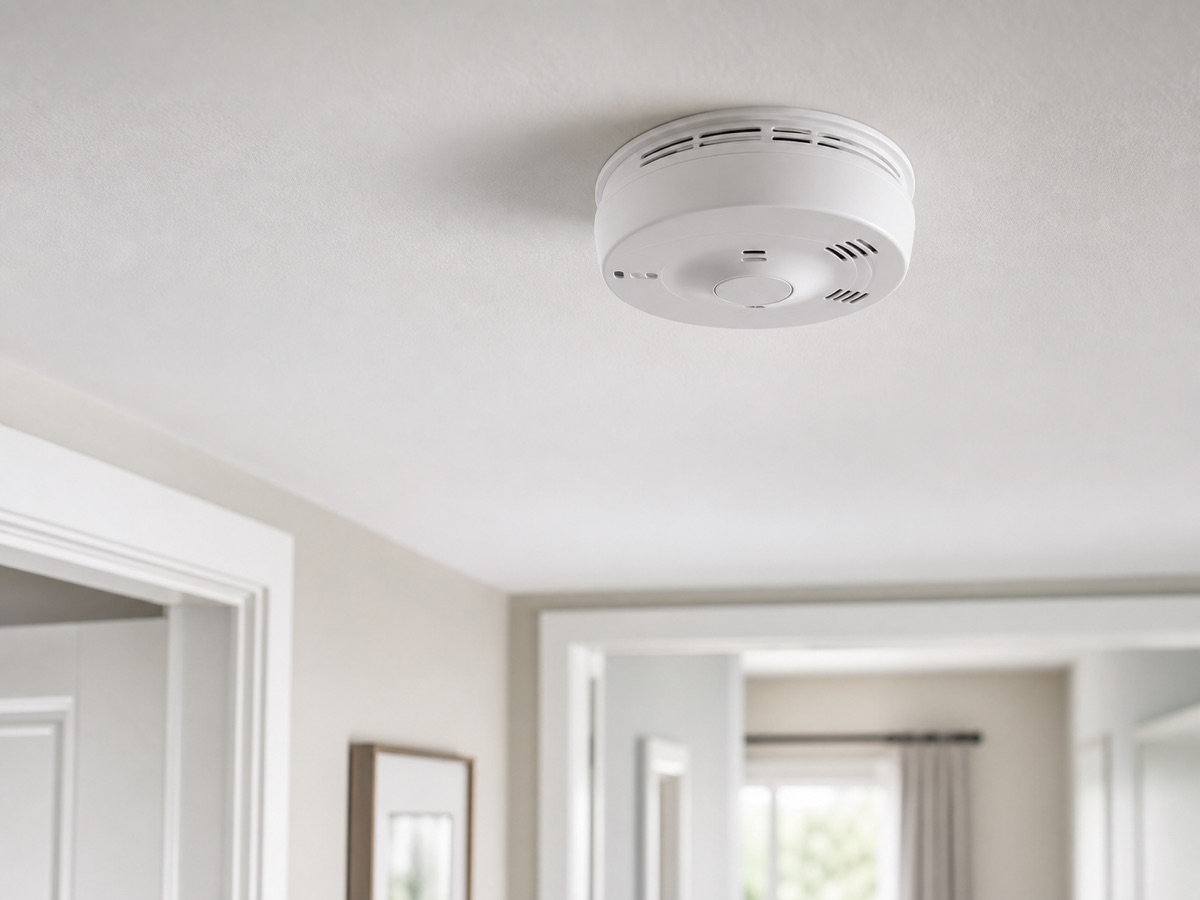
Why homeowners call for this service
- Replacing expired or yellowed smoke alarms
- Adding hardwired smoke or CO protection during a remodel
- Interconnecting alarms so one alarm can alert the home
- Improving coverage near sleeping areas and across home levels
What Gebo Electric looks at
- 01
Review existing alarm locations, age, and wiring.
- 02
Identify missing or outdated protection.
- 03
Install hardwired or interconnected devices where the home supports it.
- 04
Confirm the alarms are powered, labeled, and ready for homeowner testing.
Safety notes
This page is not a do-it-yourself electrical guide. It is here to help homeowners understand when a condition deserves a qualified electrician.
- A chirping or expired alarm should not be ignored or permanently disabled.
- Carbon monoxide is odorless and can be deadly at high levels.
- If a CO alarm sounds and anyone feels sick, leave the home and call emergency help.
Common questions
Where should smoke and CO alarms go?
Placement depends on the home and local requirements, but coverage near sleeping areas and on each level is a common planning point.
Can you replace old hardwired detectors?
Yes. Replacing aging hardwired devices is common, especially when devices are expired, mismatched, damaged, or no longer communicating correctly.